The HA/DR Project
Two Humanitarian Aid / Disaster Relief Ships for Canada
Global Climate Change is Real – Who caused it and how are meaningless arguments – The Question is: How do we live with its effects? The catastrophic effects of climate change are happening now. People are dying, and people are being left homeless right now. The HA/DR Project is dedicated to getting Canada to build two purpose built Humanitarian Aid / Disaster Relief ships for the purpose of responding and providing aid when disasters occur. CCGS Dr. Norman Bethune, CCGS Lucille Teasdale, and the HA/DR Project want to help.
CCGS Norman Bethune
The World’s first purpose built Humanitarian Aid / Disaster Relief Ship – Built in Canada as part of Canada’s Coast Guard. Dedicated to Providing Humanitarian Aid and Disaster Relief as an arm of the country’s Foreign Aid Commitment.

THE EFFECTS OF CLIMATE CHANGE
Hurricanes, Typhoons, Floods,
Tsunamis, Earthquakes, Volcanoes
and Human caused disasters
kill thousands and displace
millions. The World needs help
Changes in climate from global warming to sea level rise manifest themselves in many ways, and many of those ways pose serious risk to peoples lives. Hurricanes and typhoons are more frequent and more severe. Earthquakes, volcanic eruptions, and resulting tsunami seem all too common. As a result of these natural disasters, people are dying, people are being displaced, and people are trying to adjust to the effects of climate change on their lives. Nations of the world, particularly wealthy nations must recognize the plight of the world’s citizens. They must react to the dangers they face. The HA/DR Project is one plea directed at Canada to do something tangible to help. It is our proposal that Canada build two dedicated ‘Humanitarian Aid / Disaster Relief ships’ ,’Dr Norman Bethune’ and ‘Dr Lucille Teasdale’ Two ships named after two Canadian doctors who dedicated their lives to helping people of the world who needed help.


Other facts: Harold, the largest cyclone ever, lashed the Vanuatu Islands in 2019, with 145 mile per hour winds. Previous to Harold Cyclone Gita (2017-2018) was largest cyclone on record, and previous to that Cyclone Wilson (2016) was the largest. Prior to Wilson, 1899’s Cyclone Mahina was the record holder.
On November 1, 2020 cyclone Goni hit the Philippines, with maximum sustained winds of 310 kilometers (195 miles) per hour near its center. Goni displaced over 300,000 people and killed 20.
Overall, the tropical cyclones of the 2020 Atlantic hurricane season collectively caused at least 417 deaths and over $51 billion in damage, the fifth costliest season on record.
Even the US is at risk – A research paper entitled (Ranking of the World’s Cities Exposed to Coastal Flooding Today and in the Future), published by the OECD ( Organisation for Economic Co-operation and Development) found, the US is the world’s fifth most at risk country, and has the second highest level of risk to assets. New York, Miami, New Orleans, and Virginia Beach are listen in cities with the highest population risks from flooding.


Uncoordinated Response Faces Challenges
When disasters happen, a multitude of non-governmental organizations, private organizations, military, and individuals react. Governments send aid and often provide money. The best of our humanity is quickly on display. But, This display of caring comes with its own challenges. Aid must first arrive on site. Then it must be distributed. Each disaster then creates its own challenges to logistics and aid coordination. These challenges often extend far past the immediate news cycle.
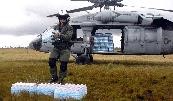
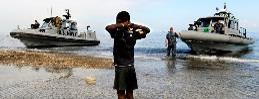
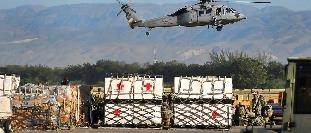

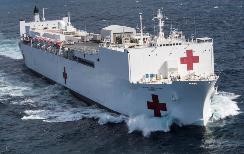
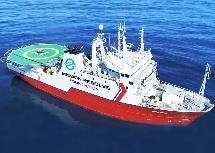
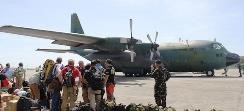
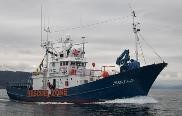
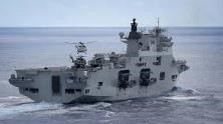
When disaster strikes the world reacts. People assume that relief activities are efficient and organized. The media gives a picture of control , heroism and caring. But, relief missions are messy.


Issues with Disaster Relief
Humanitarian relief efforts are messy. They involve a large number and avariety of actors. Private organizations, volunteers, national and international charities, governments, and international organizations of nations. Often these organizations have different missions, different interests, and different political agenda. They also arrive with a wide range of capacities, and expertise.
Coordination during disaster response is infinitely complex, and hugely multifaceted. The development of effective processes and methods for reacting to and addressing disasters is still very much in its infancy.
For example, in response to a tsunami crisis in Indonesia in (2004).poor coordination among authorities was described as the “the most important issue” facing the effectiveness of relief activities. Other issues that are present in disaster management are:
- Recognition and identification of risks
- Ranking or evaluation of risks
- Prioritizing and Responding to significant risks
- Resource control and coordination
- Reaction planning and resource allocation
- Reporting and monitoring
- Risk performance
- Reviewing the risk management framework
After the earthquake in Haiti, field hospitals used trucks and containers for operating rooms due to lack of proper sterile facilities.
CCGS Norman Bethune carries a completely equipped Relief Command Centre
The HA/DR Project’s Humanitarian Aid / Disaster Relief Ship CCGS Norman Bethune carries a dedicated command centre designed for Management of Relief and Aid activities. The Command Centre includes data management software, planning and scheduling software, and full radio and cell phone communications control facilities. In addition Bethune has a full air traffic control suite that provides radar coverage and air traffic control for a large area including local land based airports.

The Military and Disaster Relief
Military units particularly Navy units are often deployed for humanitarian aid missions, but, there are issues with this strategy. Naval units have to be available and not deployed elsewhere. The main purpose of warships isn’t humanitarian aid. They also have to be appropriately equipped. Naval ship are typically loaded with guns and ammunition ,not grain and ambulances. While warship builders always sell their designs as being designed partly for relief mission, they don’t say that the ships will not be permanently equipped with humanitarian aid supplies. Such capabilities are options and assume that Navy ships are available, and within range of the disaster location. If they are not they have to go to a friendly port and swap out military equipment for humanitarian Aid equipment and then they have to make their way to the disaster area. This is often time consuming. In addition , in many cases the amount of relief supplies that a warship can deliver is minimal.

Dollars
When disasters happen, governments quickly announce millions of dollars in aid, but it takes time for that aid to reach the stricken area and often large portions of that aid vanishes into the pockets of various corrupt participants in the supply chain. The costs associated with Norman Bethune are controlled within Canada and specifically on board Bethune. Relief supplies and support facilities are carried on board and are guaranteed to arrive and guaranteed to be distributed and used at the assigned destination. Purchase of supplies for Bethune are managed within Canada. Capabilities and costs of equipment purchased for Bethune can also be controlled

The World’s First Purpose Built Humanitarian Aid Disaster Relief Ship

CCGS Norman Bethune will is the largest ship in the Canadian Coast Guard fleet. Or rather will be when she is built. Bethune will represent Canada and Canada’s commitment to aiding those in need without conditions or political strings attached. Like her namesake, Bethune will be dedicated to helping those in need, when and where needed.


Bethune ( Previously the RO-RO cargo ship Celestine) is 162.42 meters (533 ft.) long. 140 feet longer than the Canadian Coast Guard’s longest current ship. She is 25.2 meters (85 ft) wide and has a draft of 6.52 meters (25 ft). Bethune is a converted roll-on roll-off cargo ship with a full 2 1/2 decks of aid and relief cargo. Her cargo decks can carry everything from food and shelter to the trucks ambulances and construction equipment. Everything needed to distribute aid quickly and effectively.
Air Ambulance and Air Rescue
Bethune carries 6 medium helicopters. All of which are capable of both rescue and air ambulance functions Bethune has a full area air traffic control capability, able to managing aircraft flow on the ship as well as radar traffic control for nearby land based airfields.
Refugee Space and Hospital
Bethune has a large refugee area for taking care of initial survivors. She has a full 200 bed on board hospital plus in her hold, she carries a further land based field hospital which can be quickly set up where needed.
COMMAND AND CONTROL
Bethune has dedicated space on board for command and control of humanitarian aid activities. With computing facilities, internet access, and a radio command centre.
WORK BOATS
Where even minimal docking facilities exist, Bethune can dock and use her large rear ramp to unload needed supplies and resources. zif docking facilities aren’t available, Bethune can use her four large landing craft ,her two large cranes, and on board mexefloats to unload her cargo.WORK BOATS
SUPPORT BOATS
Bethune carries four rigid inflatable work boats to assist in ship to shore transport , communications and rapid response. Two 8.6 meter patrol boats stored on Bethune’s foredeck and two 5 meter fast boats stored on her stern
CARGO DECKS
Bethune has three cargo decks. Two full decks and a half deck between the to outboard crew accommodation spaces. This gives Bethune over 7000 square meters of cargo space plus Bethune utilizes deck space on her stern for additional cargo
CREW
Bethune’s crew is drawn from several sources. The operation of the ship is the responsibility of the Canadian Coast Guard. They are responsible for the operation and maintenance of the ship and the safety and conduct of everyone on the ship while at sea. The aid and relief activities, (cargo, and distribution of aid), are conducted in partnership between the Canadian Government and various NGO organizations. Pre-established agreements determine the coordination between NGO’s and Bethune. For instance, it may be determined that ‘Doctors Without Borders will staff, supply and manage the ship’s hospital, while the UN will provide ambulances, trucks and drivers. Overall Aid and Relief operations are managed by a team made up of NGO representatives and the ship’s captain. During Missions, the ship’s crew become a resource to the aid organizations
WHY CANADA


Why should Canada build Bethune? Other countries, such as Britain, the US and Australia have groups working to get their governments to build ships like Bethune. Canada however is uniquely suited to this endeavour. Geographically Canada borders both the Atlantic and Pacific. Politically Canada doesn’t have serious enemies. We don’t always agree with the positions of one country or another but our positions are usually based on reason and fairness. Canada is not and has no ambition to become a super power. Canada is not perceived in the world to have strategic objectives. Our opinions are generally respected in International forums, but we have no international ambitions or agenda. Our foreign aid is morally based, and unbiased. A Canadian relief ship would be accepted in most every corner of the world without fear or distrust.
Being a member of the G7 countries, Canada has the economy necessary to support Bethune’s work. Canada has a social climate of respect, inclusivity and universal caring with a positive approach to both immigration and refugees.
If the world were one community looking for the perfect place geographically to station a world covering ambulance, Canada would be an ideal location. Bethune is the world’s ambulance.
NAMESAKES-
Lucille Teasdale Corti – Born in Montreal, Quebec, on 30 January 1929, Lucille Teasdale was the fourth of seven children.[2] Her father was a generous butcher in Montreal’s working-class, East End.[1]
In 1941, she enters the Catholic high school Upon hearing testimony from some nuns who had worked as missionaries in China, she decided, at 12 years of age, to become a doctor “in the Indies.”[3]

She won a scholarship to enter the University of Montreal’s Faculty of Medicine in 1950. In her class of 110 students only ten women were enrolled and only eight progressed past their first year Lucille graduated cum laude in 1955 and carried out her internship in Montreal’s Centre Hospitalier Universitaire Sainte-Justine, a pediatric and obstetric university health centre affiliated with the University of Montreal.[1]
During this internship she met Italian doctor, Piero Corti, who she would latter marry. Piero and Lucille’s early dream guided them throughout their lives
they endedup at Lacor Hospital – a non-profit hospital founded by the Catholic Comboni Missionaries in 1959. When Lucille joined Lacor, the hospital had a 40-bed maternity ward and an outpatient department, while other departments, including the operating room, were under construction. Piero and Lucille decided to settle there because the Italian bishop of the Diocese had agreed to allow them to manage and develop the hospital with relative independence. They would never ask the Diocese for money, but would raise any necessary funds themselves.
Piero and Lucille’s early dream guided them throughout their lives and remains the hospital’s guiding principle: “to offer the best possible care to the greatest number of people at the lowest possible cost” and “to train those who would replace them.”For more than 20 years, Piero and Lucille were responsible for the initial 3 months’ training of newly graduated Italian doctors deciding to carry out two years’ civil service instead of the compulsory one-year military service. They were sent through Italian government aid projects to work in seven mission and two government hospitals in northern Uganda, including St. Mary’s. The mission hospitals depended almost exclusively on these doctors.during the Uganda-Tanzania War, leading to Idi Amin’s overthrow in 1979. The hospital was repeatedly ransacked by the remnants of Idi Amin’s disbanded army fleeing from the advancing Tanzanian troops. During those months the hospital was cut off from the rest of the world, which was unaware of conditions inside. Lucille found herself undertaking an unprecedented number of operations as a result of the war and the ensuing vendettas among tribes. During one confrontation with marauders, Lucille was operating on a wounded soldier, when Piero was narrowly missed by machine gun fire . When the Tanzanian army arrived at the hospital, a commander stated that Lacor was the first hospital they had found open and functioning since they entered the country more than four months before
Norman Bethune: Surgeon, inventor, social rights activist (born 4 March 1890 in Gravenhurst, ON; died 12 November 1939 in Huang Shiko, China).
Norman Bethune was an innovative thoracic surgeon who made significant contributions in his field. He invented or redesigned 12 surgical or medical instruments and wrote many articles describing his innovations in thoracic techniques. He served in 1915 as a stretcher bearer in the First World War, and was an officer in the Royal Navy. After postgraduate training in Britain and private practice in Detroit, Michigan, he was diagnosed with pulmonary tuberculosis. From then forward, he devoted himself to other tuberculosis victims and to thoracic surgery. He worked in Montreal at the Royal Victoria Hospital and later at the Hôpital du Sacré-Coeur, Cartierville, Quebec.

During the 1930s he became increasingly disillusioned with surgical treatment and with the socioeconomic aspects of medicine and disease. Bethune challenged his profession and proposed radical reforms of medical care and health services in Canada, including a universal health care system .
Bethune volunteered for service in the Spanish Civil War, where he pioneered mobile blood transfusion units.
In 1938, seeing a need for his services, he travelled to China, where he became a battlefield surgeon for Chinese Communist forces under Mao Zedong. Bethune’s commitment to the welfare of soldiers of both sides and civilians alike during the Sino-Japanese War made him a hero in the People’s Republic of China.
WHAT WILL BETHUNE COST
MS Astrix, a container ship, converted to a navy replenishment ship cost 677million dollars converted.
Canada’s annual Foreign Aid budget is 7.1 Billion.
If a ship built to meet the description of CCGS Bethune which would not need to be militarized, would cost somewhere near the same as Astrix. Two such ships would cost only 19% of one year of Canada’s Foreign Aid budget or approximately 1.3 billion dollars. Since building the ships would likely take two years, the use of foreign ad dollars would be less than 10% per year. Annual maintenance of the two ships would be a far smaller cost. Considering that aid work done by these two ships would be direct, straight-line aid, no middle men, no funnelling of dollars. All costs would be directly controlled within Canada. Efficiencies in purchasing of goods and supplies, and operational efficiency would be totally within the control of Canada.
So, what do you think? Should Canada build Bethune and her sister ship?
The HADR Project asks for no money. If you think that Canada should build CCGS Bethune and CCGS Lucille Teasdale contact your member of parliament and tell him or her.

Picture the huge red and white CCGS Bethune arriving off the shore of a devastated coast line
with her huge red maple leaf and her international crew.
What international statement would that make about Canada’s commitment to providing aid? What pride would that give Canadians?